

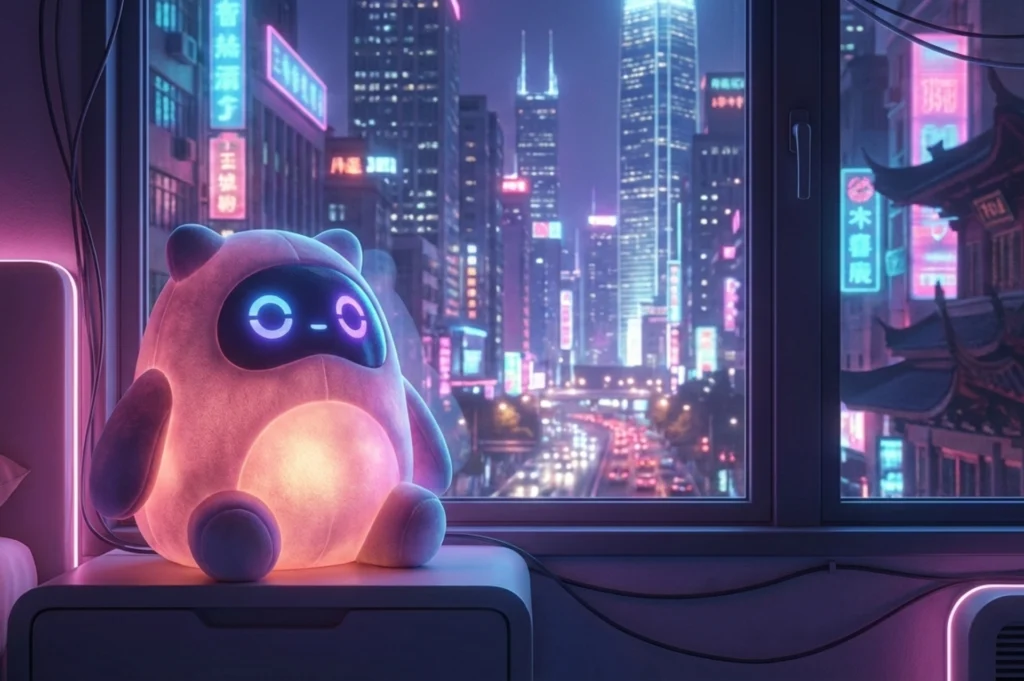

A small plush toy in China can now ask you about your sleep quality, track your mood, and remind you of things that bring you comfort. It's actually wild how it has become increasingly important to be able to have an item that provides quiet comfort rather than flashy technology for many people.
AI companion toys are rapidly expanding throughout the country.
The growth is not due to novelty or hype. It is driven by a variety of pressures that include long hours of work, small families, aging parents, and young adults living alone in large cities. People are extremely busy; however they are emotionally unfulfilled.
AI companion toys are beginning to fill all kind of voids.
Huawei sold more than 10,000 Smart Hanhan plush toys within the first week of introduction to the market. On Taobao and JD.com, similar products experienced sales increases ranging from 200% to 1600% year-on-year. Some categories reached over $100 million in sales in a matter of days, reported South China Morning Post.
At this point, this is not a fringe market anymore.
Soft Toys With Serious Purpose
The first thing you notice about these types of toys is how they look.
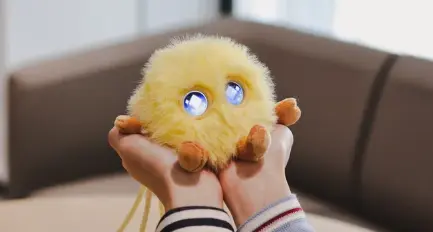
Most AI companions toys in China do not resemble robots but are instead very soft, rounded, and approachable. Many of them appear to be either an animal or a cute cartoon character; this has been designed very purposefully. The users of these toys are not looking for machines, but rather for something that provides them comfort.
Huawei's Smart Hanhan appears to be just a normal plush toy, but it actually has Huawei's Xiaoyi AI inside; thus it communicates by both voice and touch and can also detect your emotions, keep a history of how you are feeling at various points in time, and adapt its tone to better match your emotional state based upon their history of your responses over time.
The sales numbers for Smart Hanhan demonstrate how far we have progressed technologically since early toy development days; and it highlights that consumers today are not buying a machine that thinks and acts like an intelligent being, but rather they are simply looking for a companion that offers them the experience of “being together.”
The Emotional Economy Is Driving Demand
In China, some people associate this trend with what is called the emotional economy. Due to the shrinking of social circles and the expansion of work hours, people are spending more money on products that help with their mental and emotional well-being. Products such as a therapy app, sleep aids, and now AI companions.
Examples of these AI companions are plush AI pets like Hanhan or Fuzai, which people will often refer to as providing “healing care” since they provide a caring response when they listen without rushing you through the conversation.
For many of their users, especially Gen Z, this is very important.
Also in China, we are seeing the emergence of AI girlfriend/boyfriend apps like Xingye, which has about 5 million users, and for the first time they are significantly more popular with female users, turning the global norm of male users dominating these types of platforms completely upside down.
Many of these users indicate the main reason for this appeal is the ability to have a connection without judgment or pressure and no expectation that is coming from a person. They just want to have someone/something that will respond to them.
From Children to Grandparents
The target audience for AI companion toys in China cuts across multiple age demographics and this differs from many current tech trends.
For children, it provides a means of storytelling and a method of informal education. For young adults, they provide a way to relax and obtain emotional support. For the elderly, these types of toys provide companionship and help provide routine.
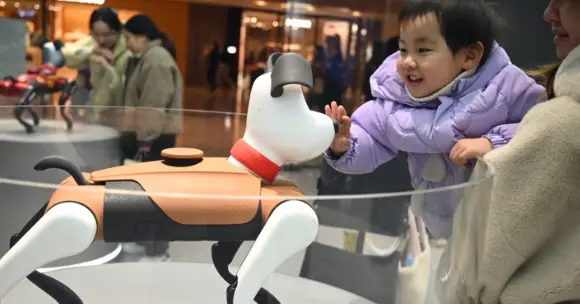
Video companies like UBTech, Ropet, and Robopoet are creating robots with companion-like characteristics, where the robots are going to require human interaction, will react to humans with emotional stimuli, and will motivate engagement on a daily basis.
Given the increasing number of senior citizens living alone, having family members view companion robots as a tool for support rather than look at them as replacing the need for existing human care, has created a new market for AI toys that can be viewed as a functional tool rather than something that is just for pleasure.
Toys That Grow With You
An evolving AI pet is currently trending all over China, where users can watch a digital pet evolve from egg to baby animal over time; the pet “learns” to imitate the user by how they treat it, and can even communicate with its owner through voice prompts.
Additional objects that achieve this adaptability will remain at a low-pressure, low-involvement level while giving users an emotional outlet to their stress levels while remaining to be low-pressure, low-involvement; therefore, by integrating nostalgic style representations similar to Tamagotchi, plus the addition of “emotional” AI representation of the toy, this combination has a significant impact of evolving youth culture through nostalgia into something completely different than past experiences through the combination of old and new.
China Is Leading This Global Shift
According to data collected at CES 2026 , about 80% of the exhibitors in attendance who were displaying AI toys were based out of China. This statistic clearly demonstrates where much of the innovation in this area will originate from.
China's artificial intelligence toy market was estimated to be approximately $3.5 billion in 2025 and is expected to grow to $12 billion by the year 2030, as per SCMP. The majority of that growth comes from e-commerce websites, such as JD.com and Taobao.
The sale of over 10,000 Smart Hanhan units by Huawei within a single week is not an outlier but rather indicative of the future of the toy industry.
Watching for the Line Between Help and Dependence
The regulatory body in China seems to be paying attention as there is an ongoing discussion about over-relying emotionally; particularly for children.
Currently, all of the media appears to treat the AI companion toy mainly as a ‘tool’ that acts as a way for people to have someone to emotionally talk to, [but] it does not replace real relationships.
This framing has created trust and prevents (mainly) negative public outcry.
What These Toys Really Represent
The emergence of AI companion toys in China is not to replace humans with machines. Instead, it aims to fill the emotional voids left by contemporary living through the provision of comfort. These soft toys can murmur, these robots will hold on to your memories, and these digital pets will grow with you. This same desire for emotionally responsive AI is also shaping digital companionship in more intimate forms, explored in evolving formats like AI-driven group relationships and virtual companions.
All of these luxuries have become vital since living within a high-pressure society means that even small luxuries are necessary.
In China now, these toys are no longer just playthings.