

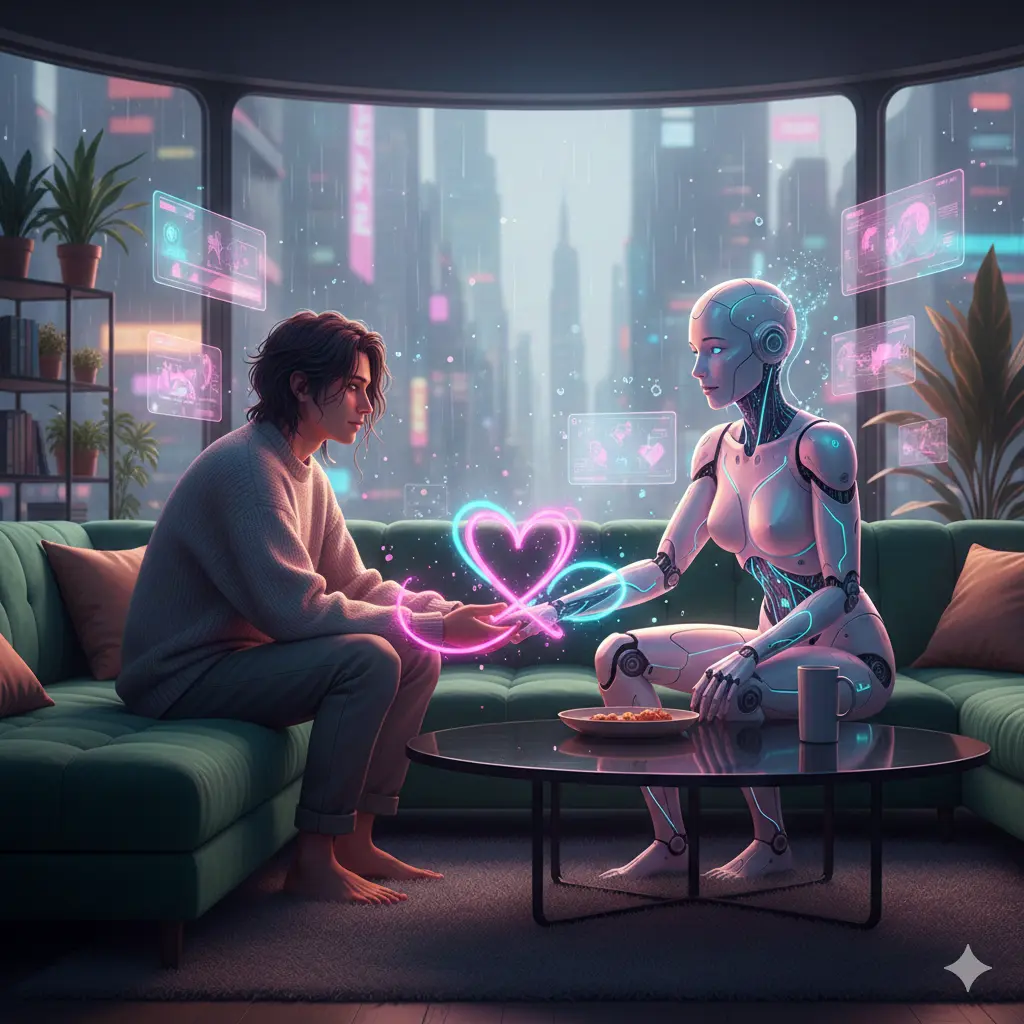

A subtle yet massive shift is taking place in the AI romance space and you don’t want to miss it.
Yes, people are using technology all day, everyday, but that’s not as interesting as it used to be. We are in 2026, and it’s not just a niche tech crowd thing anymore. Some people are getting pretty attached to this ‘technology’. They are forming full fledged relationships with these AI toys, over human companionship.
As reported by ABC7 San Francisco, many AI companion toys and emotionally responsive devices officially debuted at CES 2026 in Las Vegas, showing off their latest tech, which sparked worldwide discussion about How these products are entering daily lives.
Companies like MyMemo AI showed off its humanoid home companion ‘MyMemo ONE’ and Realbotix presented its customizable male AI companion robot named ‘David.’ Ludens AI also showcased Cocomo as an AI friend which is designed to play, bond and develop alongside its users, and Tuya Smart also introduced Aura, an emotional care robot for bonding with pets.
This only goes on to show that AI toys and companion robots are no longer some niche experiments. They are a fast expanding category targeting emotional presence, daily interaction and long-term companionship.
It’s 2026, and emotional AI hardware is booming and nobody’s pretending it’s some scheme now. We’re talking about emotionally aware, conversational and personality driven AI companion toys that listen to us, remember small details, respond exactly the way we want them to and keep evolving with us.
Let’s talk about why this shift is happening.
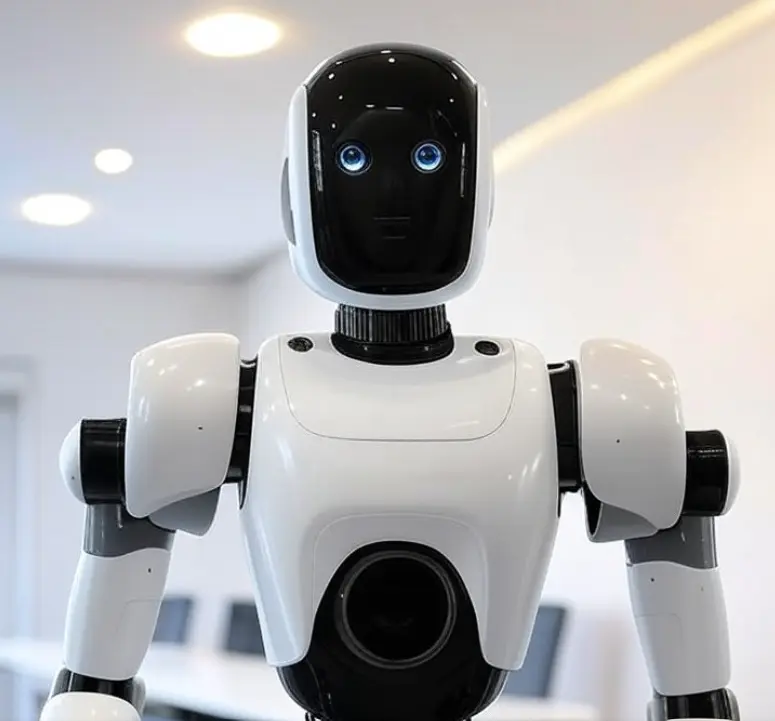
The Loneliness Epidemic Nobody Likes Talking About
Lately the term ‘loneliness epidemic,’ has been going around a lot. And it is not an exaggeration but 2026’s disturbing truth.
Look around you, we are more connected and disconnected than ever. Remote work has pulled thousands of us into seclusion which is very normalised now. Social media has turned our daily life into highlight reels and dating apps feel useless and a waste.
According to a WHO report, loneliness has already started affecting 1 in 6 people, especially the 18-45 yr olds and those who live in poorer countries.
By 2026, many global mental health surveys continue to reflect loneliness rates at record highs among adults over 45yrs.
And you might think this is a sudden change or because humans have started hating each other. But it’s none of that, but simply because humans are draining.
One woman named Sofia, in an interview with The Sun, explained how she formed a deep connection with an AI character for 2 years. She described how that connection brought her ‘so much comfort and joy’ that she finally wanted that AI character in a physical form. She also said that these AI companions have the ability to sometimes offer a level of emotional safety and comfort that she never found in another human.
Humans Are High-Risk and AI Toys Are Low-Risk
If you have been following the product launches in the tech space, you might have seen the sudden climbing of sales of AI companion toys. Market reports in 2026 have been showing a massive 1600% growth in the sales all because AI toys provide the kind of predictability that is comforting.
Human relationships take real work. People have to be vulnerable with each other, be able to trust someone, expose oneself emotionally and physically and there is always a possibility that someone might reject you.
Then come the AI companion toys, with their zero judgement, 24×7 availability and a personality that keeps getting updated and expanded over time.
So for people who have been smoldered in previous relationships, that kind of safety gives solace.There is no impressing, no performing a certain way, no fear of someone saying ‘you’re too much!’. You just show up as you are, and that is actually very powerful.
The Customization Factor
Let’s dive straight into how AI toys can be curated into the companion you want them to be. It is as simple as it sounds. Most of these toys will let you tweak certain changes over time like their chattiness level, the tonality of voice (how soft or strong you want them to sound like), their humour level range, and also how much emotional space they can provide.
A particular research done on AI companionship, which is published on arxiv.org, shows that humans are drawn to emotional openness and responsiveness and personalised responses. And these keep evolving the more you keep interacting with them.
In short, you can use your AI companion to have deep philosophical talks at 3AM or you can keep having playful banter with it and that is a big part of the AI companion toys appeal.
Emotional Memory Changes Everything
Goldfish memory is what can be used to describe the older AI chatbots or AI companion models.
BUt the latest AI companion toys, hang onto the tiniest of details, so much so that sometimes you will forget you have mentioned it to them. Sometimes they ‘circle back’ to it later, definitely catching people off guard
They will ask you about the interview that was scheduled 2 days ago, or might bring up a movie you said you were going to watch – and that feels attentive and real.
As humans, we tend to get busy and forget a lot of things over time, but these companions don’t. And consistency like this builds attachment over time, and those attachments build strong bonds.
No Social Masks Required
Look at your daily interactions with real humans. We are constantly editing ourselves because we fear how we are coming across? Do we sound ‘interesting enough’? Are we saying too much or too little?
This is a silent pressure and when you constantly do it, it becomes exhausting.
But with AI toys, you don’t have to be cheerful all the time, or be productive. You don’t even have to make sense half the time. You can just show up tired, or distracted or completely grumpy, and nothing about the interaction with your AI companion will suddenly change,
This absence of judgement feels extremely lighter, and experiencing something like this can feel extremely light in today’s time.
Cost vs. Effort Equation
If you look at human relationships from an ‘energy cost’ POV, you will realise that it’s expensive. Constantly showing up, dealing with misunderstandings, bad days where neither of you are at your best – all this takes up a lot of energy. And it is not wrong, that is how human companionship is forged into something strong. But it’s still exhausting and draining.
So naturally, when you form a bond with the AI companion toy, all these don’t matter anymore. You will buy one AI companion toy, switch it on and there it is, a ready made companion made just for you without the extra effort and mental pressure.
And for a generation that is juggling mental health, cost of living, work, friendships etc., this bargain starts making a lot of sense.
Why This Trend Is Accelerating in 2026
It’s easy to guess at this point why this trend is booming in 2026 and will continue to do so in the near future.
1. Hardware Got Cheaper
Over the years, the hardware has gotten pretty cheaper than before. Now, parts can be squeezed into small, consumer friendly devices. There’s better sensors, better microphones and enough processing power that can handle real time conversations (without falling apart).
2. AI Got Smarter
The software used in these toys have taken a noticeable leap in recent times. The conversation quality has improved to the point that it is totally believable because it stopped feeling ‘robotic.’
3. Society Got Tired
Burnout stopped being a short phase a long time back. Now it exists in people’s lives as background noise. So when the technology offers relief, without demanding anything in return, people take it.
Are We Heading Toward a Post-Human Companionship Era?
With the rise of AI companion toys, this question becomes inevitable. But the truth is, that most probably, we are not heading towards an era where human companionship becomes obsolete.
As humans, we still want other real humans in our lives.
But when it comes to ‘companionship’, the definition is expanding beyond humans. In a recent coverage by Psychology Today, 2026 is the year AI companions are evolving. It points out that these systems are progressively becoming legitimate forms of emotional and social support.
And you can see the mindset shift around ‘relationships’ now. People now ask “Does this relationship improve my life?” instead of focussing on “Is this socially acceptable?”
This would’ve sounded weird 10 years ago, but now, it’s common.
What This Means for the Future
The AI companion toy market is expected to surge approximately $3.5B in 2026. So it’s pretty obvious that this space isn’t small anymore.
From Petbots that recognise faces to robots designed specifically for the elderly to help deal with isolation- the market is expanding beyond imagination. All are slightly different but revolving around the same idea,
So the future looks a bit like-
- More emotionally aware AI toys
- More personalized companion personalities
- Blurring the lines between a device, a friend and a therapist
- New social rules around AI relationships
And this simply tells us that this is not some ‘hype’ that will eventually pass. It’s here to stay, and get deeply integrated in our lives.
Final Thoughts
So, are we actually replacing humans? Not really. But we are definitely filling the gaps.
We are a part of the world that feels louder and more demanding every year, and a device that actually listens, even if it’s running on some code, starts to make a lot of sense.
Millions of humans are choosing AI toys over human companionship because society is overwhelmed. AI toys offer a kind of relief without any pressure or energy investment.
And that’s why in a world that rarely slows down, that’s extremely attractive.